Guides & How‑To
/
Aug 15, 2025
What Are Peptides? A Beginner's Guide to Peptide Research

What Are Peptides? A Beginner's Guide to Peptide Research
What Are Peptides?
Think of peptides like text messages between your cells. They're tiny chains of amino acids—the building blocks of protein—that tell your cells what to do.
Your body already makes thousands of peptides naturally. They control everything from hunger signals to tissue repair to hormone release. The challenge? As we age, research indicates the body produces fewer of these important signaling molecules.
That's where peptide research comes in—understanding how these molecular messengers work and what happens when we can influence their levels.
Peptides vs. Proteins: What's the Difference?
Both peptides and proteins are made of amino acids, but size matters:
Peptides: 2-50 amino acids (examples: BPC-157, GHK-Cu)
Proteins: 50+ amino acids (examples: Insulin, Collagen)
Peptides are smaller and more targeted. They typically have one specific job, while proteins are larger and more complex structures.
Why Researchers Are Interested in Peptides
Peptide research has expanded significantly in recent years. Here's why scientists are paying attention:
1. Targeted Action
Unlike broad-spectrum compounds, peptides are highly specific. They fit into receptors like a key in a lock, triggering precise biological responses. This specificity makes them valuable tools for research.
2. Natural to the Body
Since your body already produces peptides, research peptides are generally well-recognized by biological systems. They work with existing pathways rather than creating entirely new ones.
3. Diverse Research Applications
Scientists are studying peptides across multiple areas:
Metabolic function and energy regulation
Tissue regeneration and repair mechanisms
Growth hormone secretion patterns
Cellular longevity pathways
Skin and collagen synthesis
Categories of Research Peptides
Metabolic Peptides
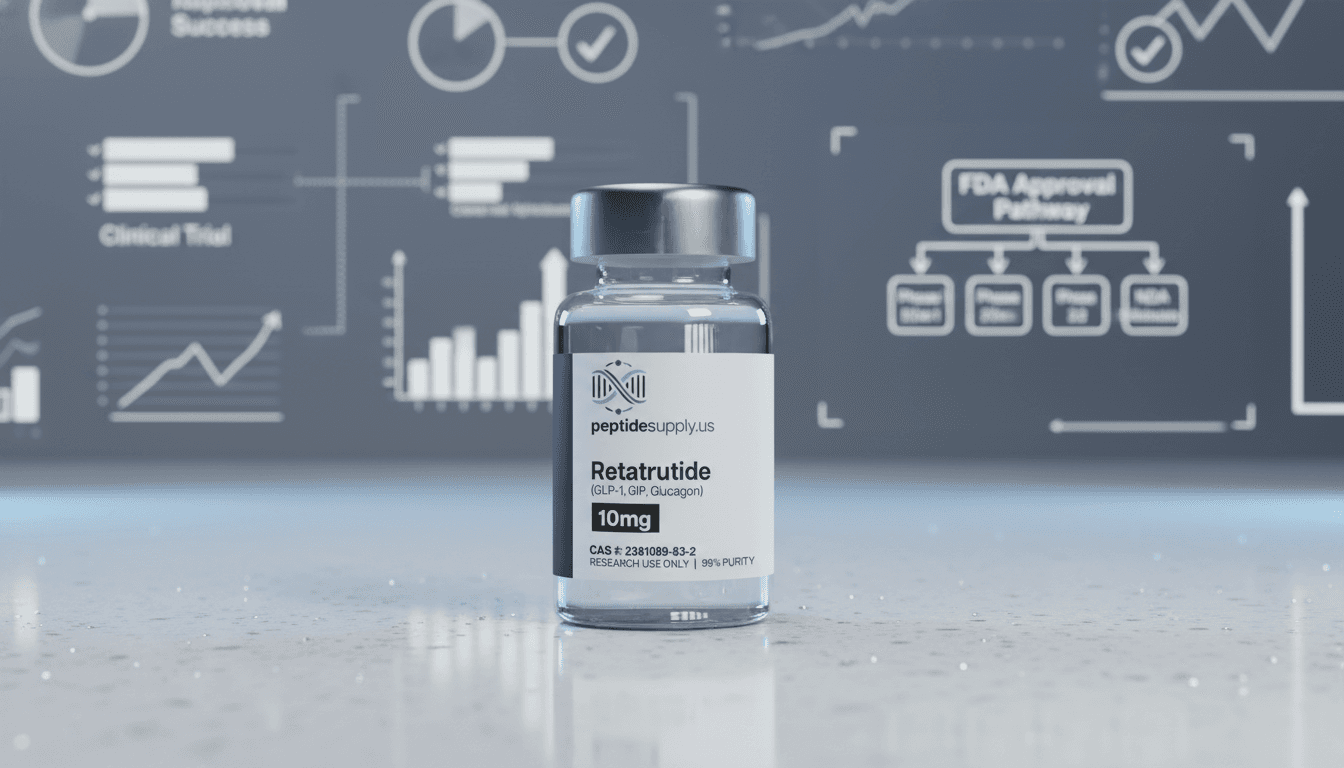
These influence appetite signaling, insulin sensitivity, and fat metabolism. Researchers are particularly interested in GLP-1 receptor agonists and newer compounds like Retatrutide that target multiple metabolic pathways simultaneously.
Regenerative Peptides
Focused on tissue repair and healing mechanisms. Research in this area examines how certain peptides like BPC-157 and TB-500 may support the body's natural repair processes.
Growth Hormone Secretagogues
These peptides stimulate the pituitary gland to release growth hormone naturally. Researchers study compounds like Tesamorelin and Ipamorelin to understand growth hormone patterns and optimization.
Longevity Peptides
A growing area examining how certain peptides affect cellular aging, mitochondrial function, and DNA repair mechanisms. Compounds like Epitalon and MOTS-C are subjects of ongoing investigation.
Quality Matters in Peptide Research
Not all peptides are created equal. For valid research results, purity is critical:
99%+ Purity: The research-grade standard for reliable results
Third-Party Testing: Independent verification of identity and purity
Certificate of Analysis (COA): Batch-specific documentation including HPLC and mass spectrometry data
Proper Storage: Lyophilized (freeze-dried) peptides stored at -20°C; reconstituted solutions refrigerated at 2-8°C
A 95% pure peptide isn't just "95% as effective"—impurities can actively interfere with the mechanisms being studied and compromise research validity.
How to Learn More
If you're new to peptide research, we recommend starting with foundational resources before diving into specific compounds.
Free Resource: The Peptide Blueprint is a 78-page guide covering the latest peptide research with 50+ scientific citations. It explains mechanisms in plain language and provides a solid foundation for understanding this field.
Key Takeaways
Peptides are short chains of amino acids that act as cellular messengers
Your body makes thousands of peptides naturally—production may decline with age
Peptide research spans metabolic, regenerative, hormonal, and longevity applications
Quality and purity (99%+) are essential for valid research
Understanding the basics helps you evaluate research findings critically
PeptideSupply.us provides research-grade peptides for scientific research purposes only. This article is for educational purposes and does not constitute medical advice.
share