Metabolic Peptides
/
Dec 17, 2025
GLP-1 Receptor Agonists Explained: Mechanisms, Research, and the Science Behind the Headlines
From Obscure Hormone to Front-Page News
GLP-1 receptor agonists went from obscure diabetes research to front-page news in three years. But behind the headlines, the actual science is far more fascinating — and nuanced — than most coverage suggests.
The molecules making headlines today — semaglutide, tirzepatide, retatrutide — didn't emerge from nowhere. They're the product of four decades of incretin biology research that began with a simple observation: food triggers hormones that regulate blood sugar far more efficiently than glucose alone.
Understanding this science isn't optional anymore. Whether you're following the research literature, evaluating compounds for study, or simply trying to separate fact from hype, the GLP-1 story is the most important narrative in peptide science right now.
The Incretin System: Where It All Started
In the 1960s, researchers noticed something strange. Oral glucose triggered a significantly larger insulin response than the same amount of glucose given intravenously. Same glucose, same blood levels — but the gut-mediated route produced more insulin.
They called this the incretin effect.
The explanation: the gut produces hormones in response to food that amplify insulin secretion. Two hormones drive most of this effect:
GIP (Glucose-dependent Insulinotropic Polypeptide) — discovered first, produced by K-cells in the upper small intestine
GLP-1 (Glucagon-Like Peptide-1) — discovered later, produced by L-cells in the lower small intestine and colon
Together, these incretins account for 50-70% of the insulin response to a meal. Without them, glucose regulation becomes dramatically less efficient.
This wasn't just academic biology. It was the foundation for an entirely new class of research compounds.
GLP-1: The Hormone Your Gut Makes After Meals
GLP-1 is a 30-amino acid peptide hormone secreted by intestinal L-cells within minutes of food intake. Its effects extend far beyond simple insulin regulation.
What GLP-1 does in research models:
Pancreatic beta cells: Enhances glucose-dependent insulin secretion — meaning it amplifies insulin release only when blood sugar is elevated, reducing hypoglycemia risk
Pancreatic alpha cells: Suppresses glucagon secretion, reducing hepatic glucose output
Hypothalamus: Activates appetite-regulation centers, particularly the arcuate nucleus and area postrema
Gastric system: Slows gastric emptying, extending nutrient absorption time and promoting satiety
Cardiovascular system: Research has documented direct cardioprotective effects through GLP-1 receptors on cardiomyocytes
Here's the problem: native GLP-1 has a half-life of just 2-3 minutes. An enzyme called DPP-4 (dipeptidyl peptidase-4) degrades it almost immediately after secretion.
This rapid degradation is why the body's own GLP-1 works locally and transiently. And it's exactly the problem that pharmaceutical research set out to solve.
How GLP-1 Receptor Agonists Work: The Mechanism Deep Dive
GLP-1 receptor agonists (GLP-1 RAs) are synthetic molecules designed to activate the same GLP-1 receptor — but resist DPP-4 degradation. The result: sustained receptor activation lasting hours to days instead of minutes.
The mechanism at the molecular level:
Receptor binding: The GLP-1 RA binds to the GLP-1 receptor (GLP-1R), a G-protein coupled receptor expressed in pancreatic islets, brain, heart, gut, and kidneys
G-protein activation: Receptor binding activates Gs protein, stimulating adenylate cyclase
cAMP cascade: Increased cyclic AMP (cAMP) activates protein kinase A (PKA) and Epac2
Downstream effects: PKA and Epac2 converge on calcium channels and exocytotic machinery, promoting insulin granule release
What makes this mechanism elegant is its glucose-dependence. The cAMP-mediated pathway requires elevated intracellular calcium from glucose metabolism to trigger insulin release. No elevated glucose, no excessive insulin. This is fundamentally different from older secretagogue drugs that forced insulin release regardless of glucose levels.
Key Insight: GLP-1 RAs don't override the body's signaling — they amplify it. This distinction matters enormously for understanding their research profile compared to other compound classes.
Single vs. Dual vs. Triple Agonism: The Evolution
The GLP-1 RA story isn't static. It's an accelerating evolution from single-target to multi-target compounds.
Generation 1: Single Agonists (GLP-1 Only)
The first generation activated only the GLP-1 receptor. Exenatide (2005) was derived from Gila monster venom — a naturally occurring GLP-1 RA with DPP-4 resistance. Liraglutide followed with improved pharmacokinetics.
Semaglutide represents the pinnacle of single-agonist design. Through strategic amino acid substitutions and a C-18 fatty acid chain that enables albumin binding, researchers achieved a half-life of approximately 7 days — from 2-3 minutes for native GLP-1 to a week-long duration.
Clinical research documented mean body weight reductions of 14.9% at 68 weeks in the STEP 1 trial. This data fundamentally changed the research landscape.
Generation 2: Dual Agonists (GLP-1 + GIP)
Tirzepatide activates both GLP-1 and GIP receptors simultaneously. The rationale: GIP and GLP-1 regulate energy balance through complementary but non-identical pathways. Dual activation produces effects that neither agonist achieves alone.
The SURMOUNT-1 trial documented mean weight reductions of 20.9% at 72 weeks at the highest dose — substantially exceeding single-agonist results.
Research suggests the GIP receptor activation adds direct effects on adipose tissue lipolysis and energy expenditure that GLP-1 alone doesn't fully engage.
Generation 3: Triple Agonists (GLP-1 + GIP + Glucagon)
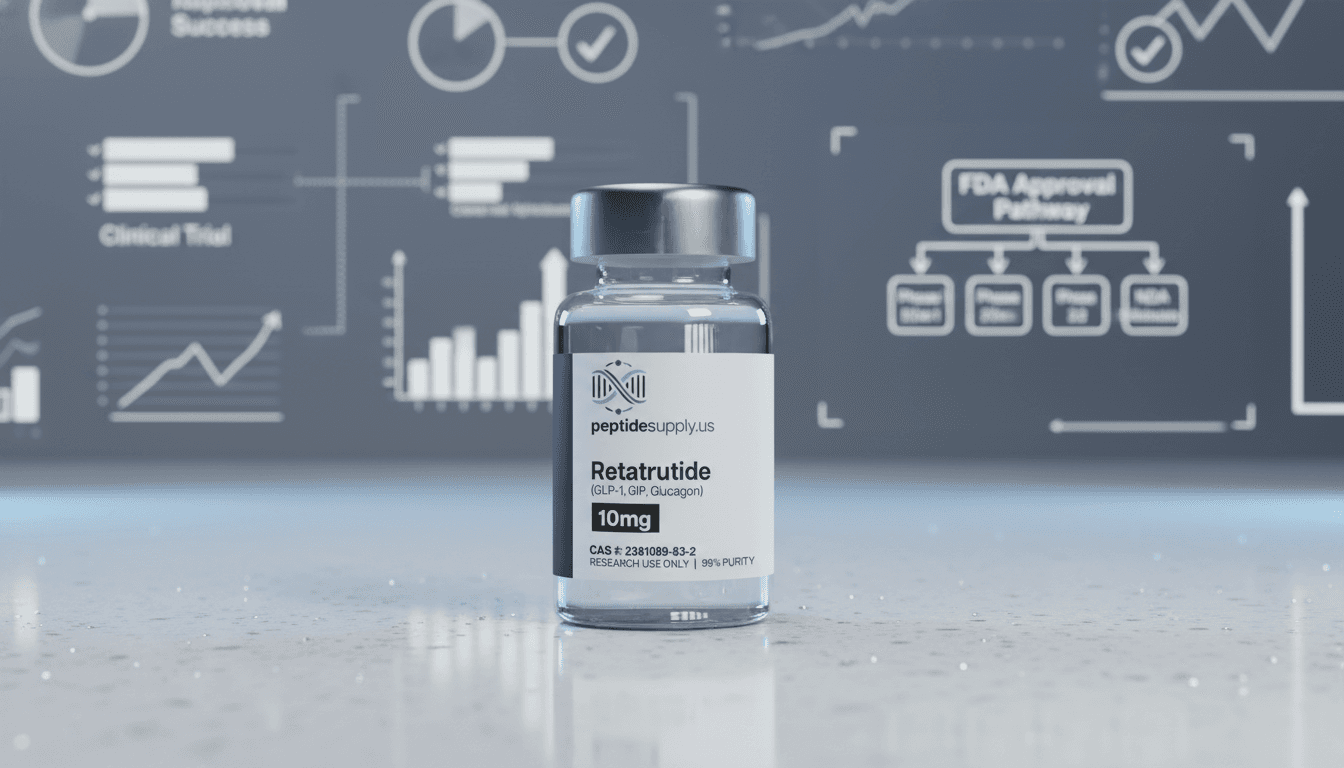
Retatrutide adds glucagon receptor activation to the dual-agonist framework. Glucagon — traditionally viewed as an insulin antagonist — turns out to have significant effects on energy expenditure and hepatic lipid metabolism when combined with GLP-1 and GIP signaling.
Phase 2 research documented 24.2% mean body weight reduction at 48 weeks. The glucagon component appears to specifically enhance energy expenditure and reduce liver fat — effects less pronounced with dual agonism alone.
The Trajectory:
Generation | Targets | Example | Research Weight Reduction |
|---|---|---|---|
Single | GLP-1 | Semaglutide | ~15% (68 weeks) |
Dual | GLP-1 + GIP | Tirzepatide | ~21% (72 weeks) |
Triple | GLP-1 + GIP + Glucagon | Retatrutide | ~24% (48 weeks) |
Each generation has expanded both the magnitude and the breadth of metabolic effects observed in research settings.
Research Milestones: The Timeline That Changed Everything
The GLP-1 RA story spans four decades. Here are the inflection points:
1983: GLP-1 identified as a cleavage product of proglucagon
1987: GLP-1's insulinotropic effect confirmed in human studies
1992: Exendin-4 isolated from Gila monster venom — a naturally DPP-4-resistant GLP-1 RA
2005: Exenatide (Byetta) becomes first approved GLP-1 RA
2010: Liraglutide approved — first once-daily GLP-1 RA
2017: Semaglutide injection approved — weekly dosing achieved
2021: High-dose semaglutide (2.4mg) approved for weight management — the inflection point for public awareness
2022: Tirzepatide approved — first dual agonist
2023: Retatrutide Phase 2 data published — triple agonism enters the literature
2024-2025: Oral formulations, combination approaches, and new indications expand the research frontier
The acceleration is remarkable. It took 22 years from GLP-1's discovery to the first drug approval. The leap from single to dual to triple agonism happened in under 5 years.
Note: The research cited in this article is presented for educational purposes. All PeptideSupply products are sold for research use only.
Beyond Metabolic Research: Emerging Applications
Perhaps the most exciting development in GLP-1 RA research is the expanding list of applications beyond metabolic endpoints. GLP-1 receptors are expressed in tissues throughout the body, and researchers are investigating effects in multiple systems.
Cardiovascular Research
The SELECT trial documented a 20% reduction in major adverse cardiovascular events with semaglutide in participants without diabetes. This finding — that a metabolic compound independently reduces cardiovascular risk — has generated enormous research interest.
The mechanism appears to involve direct anti-inflammatory effects on vascular endothelium, reduced arterial plaque progression, and improved endothelial function. Research suggests these effects are at least partially independent of weight reduction.
Neurological Research
GLP-1 receptors are densely expressed in the brain. Preclinical research has documented neuroprotective effects in models of Alzheimer's disease, Parkinson's disease, and stroke. The proposed mechanisms include:
Reduced neuroinflammation via microglial modulation
Enhanced mitochondrial function in neurons
Improved cerebral blood flow
Reduced amyloid-beta accumulation in Alzheimer's models
Multiple clinical trials are investigating GLP-1 RAs in neurodegenerative conditions. The data is early but the biological rationale is strong.
Liver Research (NASH/MASLD)
Non-alcoholic steatohepatitis (NASH) — now termed metabolic dysfunction-associated steatohepatitis (MASH) — has limited treatment options. GLP-1 RAs have shown substantial reductions in liver fat content and fibrosis markers in clinical studies. The triple-agonist approach with retatrutide is particularly promising here, given glucagon's direct effects on hepatic lipid metabolism.
Addiction Research
Among the most unexpected findings: researchers have documented reduced alcohol consumption, smoking cessation, and decreased substance use in observational studies of patients on GLP-1 RAs. The hypothesized mechanism involves reward-pathway modulation through GLP-1 receptors in the nucleus accumbens and ventral tegmental area.
This research is early-stage but has attracted significant attention from the neuroscience community.
The Regulatory Landscape
GLP-1 RAs occupy a unique regulatory position. The approved pharmaceutical products (semaglutide as Ozempic/Wegovy, tirzepatide as Mounjaro/Zepbound) are prescription medications with specific approved indications.
Research-grade peptides exist in a separate regulatory framework. Key distinctions:
Pharmaceutical GLP-1 RAs: FDA-approved for specific indications, manufactured under cGMP, prescribed by physicians
Research compounds: Sold for laboratory and research use only, subject to different regulatory requirements
The regulatory environment continues to evolve rapidly as demand for these compounds increases and new formulations enter development. Researchers should stay current with both FDA guidance and state-level regulations.
What's Next in GLP-1 Research
The GLP-1 RA field is moving faster than any other area of peptide research. Key developments to watch:
Oral formulations: Oral semaglutide proved that peptide oral delivery is achievable. Next-generation oral formulations using permeation enhancers and novel delivery systems aim for higher bioavailability and lower doses. Research compounds exploring oral delivery represent a major frontier.
Beyond triple agonism: Researchers are already investigating quad-receptor approaches and peptide-small molecule conjugates. The question is no longer "can we target multiple receptors?" but "what's the optimal combination?"
Muscle-sparing formulations: A significant research focus is developing GLP-1 RA approaches that preferentially reduce fat mass while preserving lean mass. Combination strategies with myostatin inhibitors and other anabolic signals are under investigation.
Personalized approaches: Genetic variants in GLP-1 receptor structure and downstream signaling pathways affect individual responses. Pharmacogenomic research may eventually guide compound selection based on individual biology.
Projected market trajectory: The GLP-1 RA market is projected to exceed $50 billion by 2030 — making it the fastest-growing pharmaceutical category in history. This investment is driving unprecedented research velocity.
Frequently Asked Questions
What's the difference between GLP-1 and a GLP-1 receptor agonist?
GLP-1 is the natural hormone your gut produces after eating — it has a half-life of 2-3 minutes. A GLP-1 receptor agonist is a synthetic molecule designed to activate the same receptor but resist enzymatic degradation, extending activity from minutes to days or weeks.
Why are there so many different GLP-1 RAs in research?
Each compound has a different pharmacological profile — different receptor selectivity, half-life, potency, and tissue distribution. Semaglutide, tirzepatide, and retatrutide represent successive generations with expanding target profiles. Research continues to explore which profile is optimal for different applications.
Are research-grade GLP-1 peptides the same as pharmaceutical products?
Research-grade peptides contain the same molecular sequence but are manufactured for laboratory research purposes, not human therapeutic use. They are not interchangeable with FDA-approved pharmaceutical products, which undergo different manufacturing and quality standards. Research compounds are sold strictly for research applications.
What makes triple agonism different from just combining three separate compounds?
A triple agonist like retatrutide is a single molecule engineered to activate three receptors simultaneously. This creates a coordinated signaling response that differs from administering three separate compounds, which would have different pharmacokinetics, tissue distribution, and receptor occupancy timing. The integrated approach appears to produce synergistic rather than merely additive effects.
Why is the cardiovascular research significant?
The finding that GLP-1 RAs reduce cardiovascular events independently of their metabolic effects suggests these compounds interact with cardiovascular biology in ways researchers are still mapping. GLP-1 receptors on cardiomyocytes and vascular endothelium appear to mediate direct protective effects. This expands the potential research applications well beyond metabolic endpoints.
Key Takeaways
GLP-1 receptor agonists amplify the body's own incretin signaling — they enhance existing pathways rather than overriding them
The evolution from single to dual to triple agonism has produced progressively greater effects in research: ~15% → ~21% → ~24% weight reduction
Native GLP-1 has a 2-3 minute half-life; modern GLP-1 RAs extend this to 7+ days through strategic molecular engineering
Research applications are expanding rapidly beyond metabolism into cardiovascular, neurological, hepatic, and addiction fields
The $50B+ projected market is driving unprecedented research velocity across every aspect of incretin biology
FREE RESEARCH GUIDE
The Peptide Blueprint
Our Retatrutide chapter covers the triple-agonist science in unprecedented depth — including head-to-head research data. 78 pages of peer-reviewed science, free for researchers.
Download Free
At PeptideSupply.us, our research-grade metabolic peptides ship with batch-specific Certificates of Analysis verifying 99%+ purity — because the science behind your research compounds should match the rigor of the research itself.
Explore our research-grade peptides
All products sold for research purposes only. Not for human consumption. These statements have not been evaluated by the FDA. This article is for educational and informational purposes only.
share