Recovery & Healing
/
Jan 7, 2026
BPC-157 Research Review: What 1,500+ Studies Reveal About the Body Protection Compound
1,500 Studies and Counting
Since its discovery in gastric juice, BPC-157 has accumulated over 1,500 research citations across tissue repair, gut health, and neurological models. No other peptide in the healing category comes close to this volume of investigation.
Here's what researchers keep finding.
BPC-157 — Body Protection Compound-157 — is a stable gastric pentadecapeptide. Fifteen amino acids, derived from a protective protein found in human gastric juice. And in study after study, across dozens of tissue types and injury models, it demonstrates a consistency of effects that has made it one of the most investigated peptides in preclinical research.
But here's what matters most: the transparency. This article covers what the research shows, what it doesn't, and where the critical gaps remain. Because understanding the evidence — including its limitations — is what separates serious research from hype.
Discovery: From Gastric Juice to Research Compound
In the early 1990s, researchers at the University of Zagreb isolated a peptide fragment from human gastric juice that demonstrated unusual protective properties. The gastric mucosa — the lining of the stomach — is one of the harshest environments in the body: acidic, enzymatically active, constantly exposed to mechanical stress.
Yet it heals remarkably quickly. When researchers isolated the compounds responsible for this resilience, they identified a 15-amino acid sequence with remarkable stability.
What made BPC-157 immediately interesting:
Acid stability: Unlike most peptides, BPC-157 maintains its structure in gastric acid — an environment that destroys most proteins within minutes
No known natural analog: While derived from a larger gastric protein, BPC-157 as a standalone sequence doesn't appear to circulate naturally in the bloodstream
Broad tissue effects: Early studies showed effects far beyond the gastrointestinal tract
The sequence: Gly-Glu-Pro-Pro-Pro-Gly-Lys-Pro-Ala-Asp-Asp-Ala-Gly-Leu-Val. Fifteen amino acids. Molecular weight approximately 1,419 Da. Stable in solution without carriers or adjuvants.
From this discovery, over three decades of research followed.
The Mechanism Nobody Expected
Early researchers assumed BPC-157 would be a simple cytoprotective agent — protecting stomach lining from damage. What they found was far more complex.
BPC-157 appears to interact with multiple signaling systems simultaneously. Published research has documented interactions with:
The Nitric Oxide (NO) System
BPC-157 modulates the nitric oxide system in a way researchers describe as "contextual" — it appears to upregulate NO where it's deficient and normalize it where it's excessive. Studies indicate this bidirectional modulation may explain its effects across different tissue types and injury models.
The NO system governs vasodilation, inflammation, and cellular signaling. A compound that modulates it contextually rather than simply increasing or decreasing it is pharmacologically unusual.
VEGF and Angiogenesis
Research has documented that BPC-157 upregulates Vascular Endothelial Growth Factor (VEGF) expression. VEGF is the primary signal for new blood vessel formation (angiogenesis). In tissue repair, blood supply is often the limiting factor — more blood vessels mean more oxygen, more nutrients, and faster repair.
Animal model studies have documented increased blood vessel density at injury sites treated with BPC-157 compared to controls.
The FAK-Paxillin Pathway
Focal Adhesion Kinase (FAK) and paxillin are critical proteins in cell migration and tissue remodeling. BPC-157 has been shown to activate this pathway, which governs:
How cells attach to extracellular matrix
How cells migrate toward injury sites
How new tissue integrates with existing structures
This pathway activation may explain why BPC-157 research consistently shows effects across multiple tissue types — the FAK-paxillin system is universal to tissue repair.
Growth Factor Modulation
Beyond VEGF, research has documented BPC-157 interactions with:
EGF receptors (epidermal growth factor) — relevant to mucosal and skin healing
FGF (fibroblast growth factor) — relevant to connective tissue repair
HGF (hepatocyte growth factor) — relevant to organ tissue repair
The multi-pathway profile is what makes BPC-157 mechanistically unusual. Most peptides target one receptor system. BPC-157 appears to orchestrate a coordinated repair response across multiple pathways.
Tissue Repair Research: The Core Evidence
The largest body of BPC-157 research involves tissue repair across multiple tissue types. All of the following data comes from animal model studies — an important distinction we'll address directly.
Tendon and Ligament Research
Multiple studies have documented BPC-157's effects on tendon healing in rat models:
Transected Achilles tendons showed accelerated healing with improved biomechanical properties
Research documented increased collagen organization at repair sites
Studies demonstrated effects on both the inflammatory and proliferative phases of healing
Muscle Tissue Research
In crushed and lacerated muscle models:
Earlier functional recovery compared to control groups
Reduced fibrotic scar tissue formation
Maintained muscle fiber organization through the repair process
Bone Research
Fracture models have documented:
Enhanced callus formation at fracture sites
Improved bone mineral density during healing
Accelerated radiographic healing markers
Nerve Research
Among the most intriguing findings — BPC-157 has demonstrated effects in peripheral nerve injury models:
Transected sciatic nerve studies showed improved functional recovery
Research documented enhanced axonal sprouting
Studies indicate neuroprotective effects in both central and peripheral models
Note: The research cited in this article is presented for educational purposes. All PeptideSupply products are sold for research use only.
Gut-Brain Axis Findings
BPC-157's origin in gastric juice makes its gastrointestinal effects particularly relevant. Research has documented:
Gastric ulcer models: Accelerated healing in multiple ulcer induction models (ethanol, NSAID, stress-induced)
Inflammatory bowel models: Reduced inflammatory markers and improved mucosal healing in colitis models
Intestinal anastomosis: Improved healing of surgical bowel connections in animal studies
Esophageal damage: Protective effects against reflux-induced esophageal injury
The gut-brain connection adds another dimension. BPC-157 research has documented effects on dopaminergic system modulation, potentially through vagal nerve-mediated pathways. Studies in animal models showed interactions with the dopamine system that researchers describe as "stabilizing" rather than simply stimulating or inhibiting.
Neurological Research Applications
Beyond peripheral nerve repair, BPC-157 research has explored central nervous system effects:
Traumatic brain injury models: Reduced edema and improved behavioral outcomes in rat TBI studies
Dopamine system: Documented interactions with D1 and D2 receptor pathways
Serotonin system: Research indicates modulation of serotonergic pathways
Seizure models: Anticonvulsant effects documented in certain epilepsy models
The neurological research is earlier-stage than the tissue repair data but has generated significant interest, particularly given BPC-157's ability to cross protective barriers and its multi-system modulatory profile.
Synergistic Research: BPC-157 + TB-500
One of the most active areas of current investigation involves combining BPC-157 with TB-500 (Thymosin Beta-4). The rationale: these compounds appear to work through complementary mechanisms.
BPC-157 primarily drives angiogenesis (new blood vessel formation) and growth factor upregulation — building the supply infrastructure for repair.
TB-500 primarily drives cell migration and actin reorganization — directing repair cells to the injury site.
Animal model research has documented that the combination produces enhanced tissue repair outcomes compared to either compound alone. The proposed mechanism: BPC-157 builds the blood supply while TB-500 mobilizes the cellular workforce. Together, the repair response is both better supplied and better directed.
Delivery Route Research
Unlike most peptides, BPC-157 has been studied via multiple delivery routes:
Subcutaneous: The most common research route, showing consistent systemic effects
Oral/Intragastric: Uniquely among peptides, BPC-157's acid stability allows oral administration with documented systemic effects in animal models
Intraperitoneal: Used in many research protocols for systemic delivery
Topical: Applied in cream formulations in wound healing studies
The oral bioavailability data is particularly notable. Most peptides are destroyed by gastric acid and digestive enzymes. BPC-157's origin in gastric juice appears to confer natural resistance to this environment — a property that has significant implications for potential delivery methods in research.
Current Limitations and Open Questions
Transparency about limitations is essential for credible research evaluation. Here's what the BPC-157 evidence base lacks:
No Completed Human Clinical Trials
This is the most significant limitation. Despite 1,500+ citations, the vast majority of BPC-157 research has been conducted in animal models — primarily rats. While animal models provide valuable mechanistic data, they do not guarantee translation to human biology.
A Phase 1 clinical trial for inflammatory bowel disease has been registered (NCT number available in ClinicalTrials.gov), representing the first formal step toward human data. But as of this writing, comprehensive human clinical trial results have not been published.
Research Concentration
A significant proportion of BPC-157 research originates from a single research group at the University of Zagreb. While the research has been published in peer-reviewed journals and replicated by other groups in some areas, the concentration of research from one institution is a legitimate consideration when evaluating the evidence.
Dose-Response Data
While dose-dependent effects have been documented, comprehensive dose-response curves across different tissue types and delivery routes are still being established. Optimal dosing for different research applications remains an active area of investigation.
Long-Term Data
Most BPC-157 studies measure outcomes over days to weeks. Long-term effects — both positive and potential negative — across months or years of exposure are largely unstudied.
These limitations don't invalidate the existing research. They contextualize it. A compound with 1,500+ citations and consistent preclinical results is scientifically interesting. But scientific interest and clinical proof are different things.
Frequently Asked Questions
What does BPC-157 stand for?
Body Protection Compound-157. The "157" refers to its position in the sequence of peptide fragments isolated during the original gastric juice research. It's a 15-amino acid peptide fragment derived from a larger protective protein found in human stomach secretions.
Why is BPC-157's acid stability significant?
Most peptides are destroyed by stomach acid within minutes. BPC-157 originated in gastric juice — one of the most acidic environments in the body — and retains its structure and activity in that environment. This property is pharmacologically unusual and has implications for oral delivery research.
What's the difference between BPC-157 and BPC-X blends?
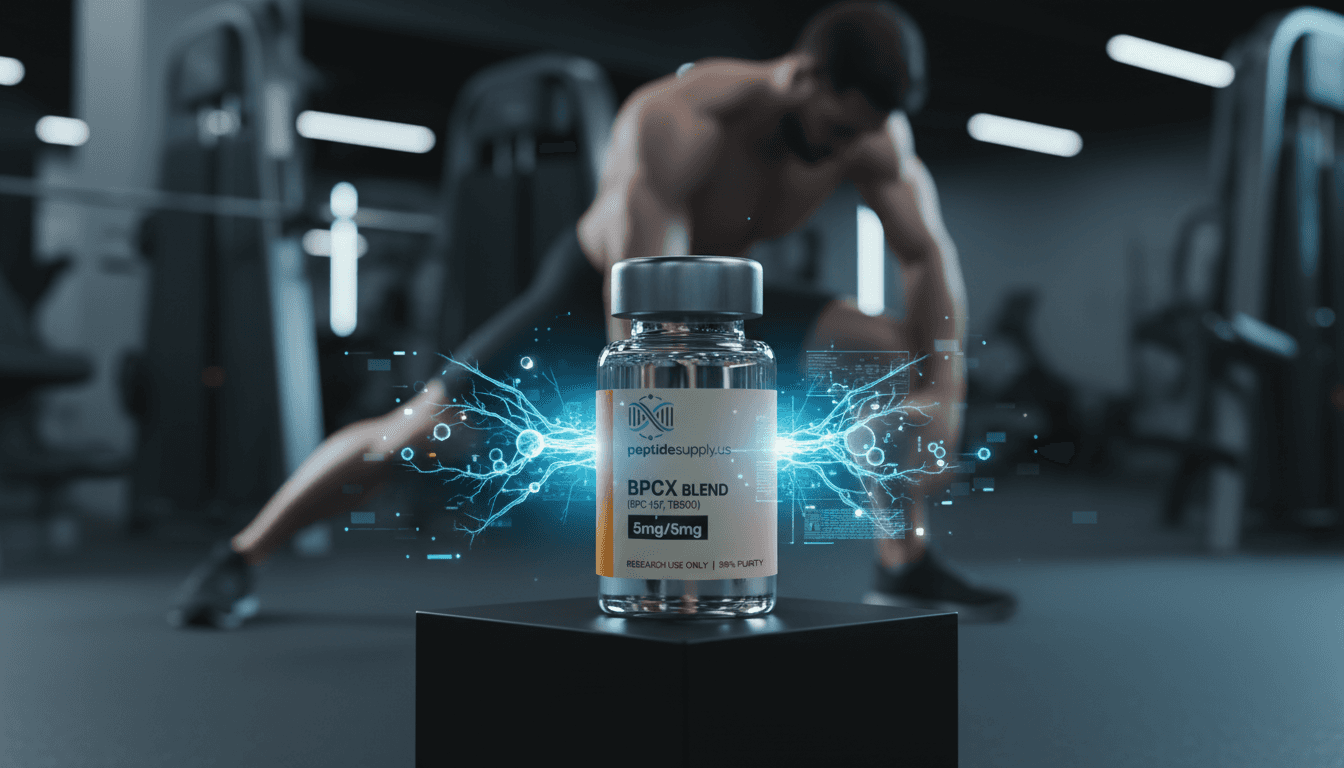
BPC-157 is the standalone pentadecapeptide. BPC-X blends typically combine BPC-157 with TB-500 (Thymosin Beta-4) based on synergy research suggesting complementary mechanisms in tissue repair. The blend approach targets both angiogenesis (BPC-157) and cell migration (TB-500) simultaneously.
Why are there no human clinical trials yet?
Peptide clinical trials require significant investment and regulatory navigation. BPC-157 research has been primarily academic rather than pharmaceutical-industry driven, which limits clinical trial funding. A Phase 1 IBD trial has been registered, representing the first step in the clinical development pathway.
Is BPC-157 research only relevant to injury?
No. While tissue repair is the most-studied application, BPC-157 research extends to gastrointestinal protection, neurological effects, organ damage models, and dopaminergic system modulation. The multi-pathway mechanism appears to have implications beyond acute tissue repair.
Key Takeaways
1,500+ research citations make BPC-157 one of the most-studied peptides in preclinical tissue repair research
Multi-pathway mechanism — NO system modulation, VEGF upregulation, FAK-paxillin activation — explains consistent effects across tissue types
Unique acid stability allows oral administration with documented systemic effects in animal models
BPC-157 + TB-500 synergy research shows enhanced outcomes through complementary mechanisms
Critical limitation: no completed human clinical trials — the evidence is promising but predominantly preclinical
FREE RESEARCH GUIDE
The Peptide Blueprint
BPC-X and the synergy science are covered in Chapter 5 — breaking down the combination evidence with research data tables. 78 pages of peer-reviewed research, free for researchers.
Download Free
At PeptideSupply.us, our research-grade BPC-157 ships with batch-specific Certificates of Analysis verifying 99%+ purity. Because the integrity of your research compounds directly determines the integrity of your research.
Explore our research-grade peptides
All products sold for research purposes only. Not for human consumption. These statements have not been evaluated by the FDA. This article is for educational and informational purposes only.
share